

If you’ve ever spent your morning commute daydreaming about starting afresh with your career, this feature is for you. Each Monday, we speak to someone from a different profession to discover what it’s really like. This week we chat to barrister Benjamin Knight, from Central Chambers, Manchester, and Liberal Chambers, London.
Take-home pay can be painfully low… Early on, a junior criminal barrister might bill something like £10,000 to £50,000 in gross fees. Even that can be misleading. Some fees are never collected properly, some get written-off and none of it accounts for chambers contributions, travel, insurance, practising costs and tax. Once you factor in the hours, take-home can be painfully low. At the top end, you sometimes hear headlines about criminal barristers earning millions. In reality, the handful who might gross seven figures tend to be very senior KCs, and the eye-watering figure can reflect years of work on a single huge case alongside everything else. Crime income is also unpredictable year to year, which makes ordinary life planning oddly difficult.
People think nothing of ringing at 10pm… A normal week is 50 to 60 hours but a trial week can be double that. Late nights are common, not because barristers love the grind, but because you can spend the whole day in court and then start your second day of work at night: prepping the next day of trial while also keeping other cases moving. Add late disclosure and last-minute instructions and you learn to take breaks where you can rather than where you are “supposed” to.
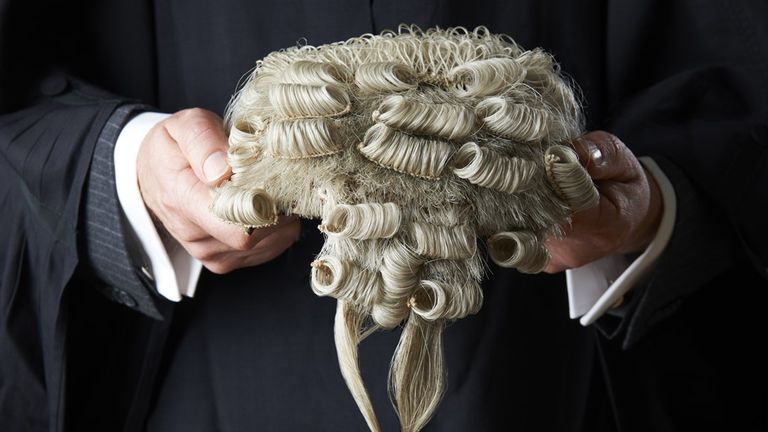
Criminal barristers joke that we do not retire; we just drop dead in our wigs… The more realistic version is that people keep going while they are still sharp and want to do it. Some move to the bench (become judges). I am Generation X. Retirement has always felt like a slightly fictional concept unless you end up with a decent pension route. For many, that’s a lot of the attraction of becoming a judge.
Find tips and personal finance news in the Money blog
You can be friends with opponents, absolutely… sometimes close friends. Professionalism comes first. You are not there to be mates; you are there to do your job properly. Cordial is the default. Friendly is common. Hostile is usually a sign someone is doing it badly. There is a social scene, but it is not the boozy fantasy some dramas sell. People are busy. There are events, and there are also WhatsApp groups because of course there are. Is it competitive? At the very junior end there can be a bit of swagger, and pupils can be hilariously keen. But most criminal barristers are too busy trying to survive the diary to play status games.
The job can still be lonely… especially long cases away from home, but the bar can also be very good at rallying when someone needs help, provided people actually ask.
There should always be a flicker of adrenaline before you address a judge or jury… If there is not, you are either not paying attention or you have gone numb. I work from bullet points and themes, not scripts. If I write it all out, I end up editing myself while I speak anyway. Your approach changes with experience. Good advocacy is listening, especially in cross-examination, where you need to plan ahead and adapt to the answer you did not quite expect.
Judge advocacy and jury advocacy are different… Juries are usually listening fresh. Judges have heard versions of the same submissions for years, and occasionally the blinkers are on too tight, so you have to nudge them back without sounding like a prat. If I am wrong, I concede it immediately. Credibility is hard-won and easily lost, so you guard it.
The brutal bit is getting in… Pupillage is fiercely competitive and expensive to reach.
The real end goal is not letters after your name… It is being instructed in good-quality work you are suited to and reaching the point where you walk into court and think: “I am supposed to be here.” Also, trying to banish imposter syndrome, which is far more common at the bar than the public would guess.
One case always reminds me this job is not only about winning arguments… Early in my career, I was doing prison law work. A client asked me to see his cellmate, who was illiterate and unable to write. The cellmate had a very old conviction for a serious sexual offence, said to have happened when he was a child. When I met him, he was frighteningly unwell and clearly being exploited in prison. He was being used “as a reward” for other prisoners, among other things. I tried to investigate an appeal, but the case was so old that much of the paperwork was gone. What I could do was focus on getting him out of prison and into secure healthcare. We managed it. Over time, he stabilised physically, then mentally, and eventually rebuilt something like a life. One Christmas Eve I visited him in the medical unit and he handed me a Christmas card. A nurse told me it was the first card he had ever written to anyone. I still have it in my desk drawer.
I was part of the longest jury trial in English history… It was an endurance test for everyone, including the jury. What it proved to me is that juries can cope perfectly well with complex, document-heavy cases if you present them properly. That trial is about as good a rebuttal as you could want to the myth that juries cannot manage complexity.
Pic: iStock
I have been assaulted in the course of work… including by defendants, and once by a party in family proceedings when I had a mixed practice. Emotions run high and people can lash out. I have also had an incident after a case where I felt unsafe travelling home and reported it. It involved a car and the M62… In some types of work, you do become more cautious leaving court buildings. Online hostility exists, too. The comment sections can be feral. I stopped even reading that stuff years ago. People sometimes forget that representing someone is not endorsing what they are accused of. Attacking lawyers for doing their job is never justified.
Historically, the bar was dominated by affluent, cisgendered, heterosexual, white men, and visibility matters… If you cannot see people like you, it is easy to assume you do not belong. That is true for care leavers and the neurodiverse, and it’s true for openly gay and trans people as well. We made progress, and then access became harder again as legal aid and working conditions deteriorated. The debt is huge, the early years can be financially brutal and people sensibly decide not to gamble their lives on it. That harms everyone, because it shrinks the pool not just of advocates but of future judges. If we want the best people, and a judiciary drawn from a broad range of lived experience, the system has to be viable for people who do not have a financial safety net.
The criminal justice system is fairer than people think… and I do think juries take their oaths seriously. I have seen verdicts that could only have been reached by careful, forensic thinking. But bias exists. Some of it is unconscious. You can see it in patterns and outcomes. So yes, the system tries to be fair, and often is, but it is not perfect and we should not pretend it is. What I do not accept is that the answer to unfairness is to weaken one of the best safeguards we have against it: the jury. Juries are not what is clogging the system in most cases, so removing them does not solve the backlog. If you want fewer cracked trials, do the boring things properly: disclosure early and properly, case management that is real rather than performative, and resources and training for the institutions that keep failing at basics.
I would start with… the lack of adequate administration units in police forces and the shrinking of the CPS – as well as the back-covering culture in both.
Stop with the “walked free” nonsense… One thing I’d change is honest reporting. If you report a sentence, publish the sentencing remarks and context.
We have the cab rank rule… If I am competent, available and properly instructed, I should not pick and choose clients based on popularity or my personal feelings. The rule exists so representation does not become a luxury only for the likeable.
If a client tells me they did it, I cannot mislead the court… I can test whether the prosecution can prove what it alleges, or more commonly advise a guilty plea and ensure the sentence is based on what was actually done, not on exaggeration. Safe convictions and lawful sentences matter.
More from this series:
Secrets of a cabbie
I make thousands photographing celebs
I’m a child psychiatrist
One case that hit me later involved an indecent images offence… The material was extremely serious. He pleaded guilty and was sentenced properly. Afterwards, it emerged within his family that he had been abused as a child in a way that mirrored what was found in the images, and that others in the family had also been victims. It did not excuse the offence, but it changed my understanding of it. It was a grim reminder that the world is rarely as simple as “victims and monsters”. He refused to advance it as mitigation but he was plainly trying to make sense of what had been done to him for years, from infant to adult.
A piece of advice for anyone wanting to be a barrister… guard your reputation early. Social media has a long memory.
If I could change one thing about the justice system… it would be more honesty, particularly the relationship of honesty between the justice system, the media and the public. The public often does not understand what happens in court. The press increasingly chases outrage and clicks. Lawyers are terrible explainers of their own cause and often constrained from speaking about individual cases. So we end up with a distorted public conversation – anything short of the harshest outcome becomes “getting away with it”. We need political courage and a more grown-up debate: what outcomes do people actually want in real situations – punishment, rehabilitation, diversion – and what are they willing to pay for? Without that honesty, every other reform sits on sand. Any plonker can call to be “tougher on…”. The reality is that we are all thinking of these things all the time, but reality is not so binary. There are no monsters. There are people who may (or may not) have done monstrous things. A justice system cannot be just about what lets people sleep easier in their beds.