
More than a quarter of a million pension savers will receive higher payments after the Government confirmed changes to how older pension benefits are increased.
The Department for Work and Pensions said 256,000 people will benefit from new plans to apply inflation-linked rises to certain pre-1997 pension payments.
DWP minister Torsten Bell told MPs that the changes will apply to members of the Pension Protection Fund and the Financial Assistance Scheme.
The PPF will see around 165,000 members receive higher payments as a result of the policy change.
A further 91,000 people who currently receive payments from the FAS will also benefit.
Mr Bell said: “At the Budget, the Chancellor announced that the Government will introduce pre-1997 indexation in the Pension Protection Fund and the Financial Assistance Scheme, for members whose original schemes provided this”.
The PPF protects people whose defined benefit pension schemes became insolvent after April 2005.
The FAS supports members whose employers went out of business before the PPF was created.
Individuals cannot belong to both schemes, meaning the total figure of 256,000 beneficiaries reflects separate groups with no overlap.
The change addresses a long-standing issue affecting pension benefits built up before April 6 1997.

More than a quarter of a million pension savers will receive higher payments
|
GETTYRegulations introduced in 1997 required defined benefit pensions to increase each year in line with inflation.
Benefits earned before that date were excluded from the statutory requirement.
As a result, some pension savers have seen payments remain frozen for decades while living costs continued to rise.
Defined benefit schemes provide a guaranteed income in retirement based on salary and length of service.
However, the absence of mandatory pre-1997 indexation meant many members received lower real-terms incomes than colleagues whose pensions were built up later.
Some pension schemes offered discretionary increases on pre-1997 benefits.
These arrangements varied widely, with some schemes providing no inflation increases at all.
LATEST DEVELOPMENTS
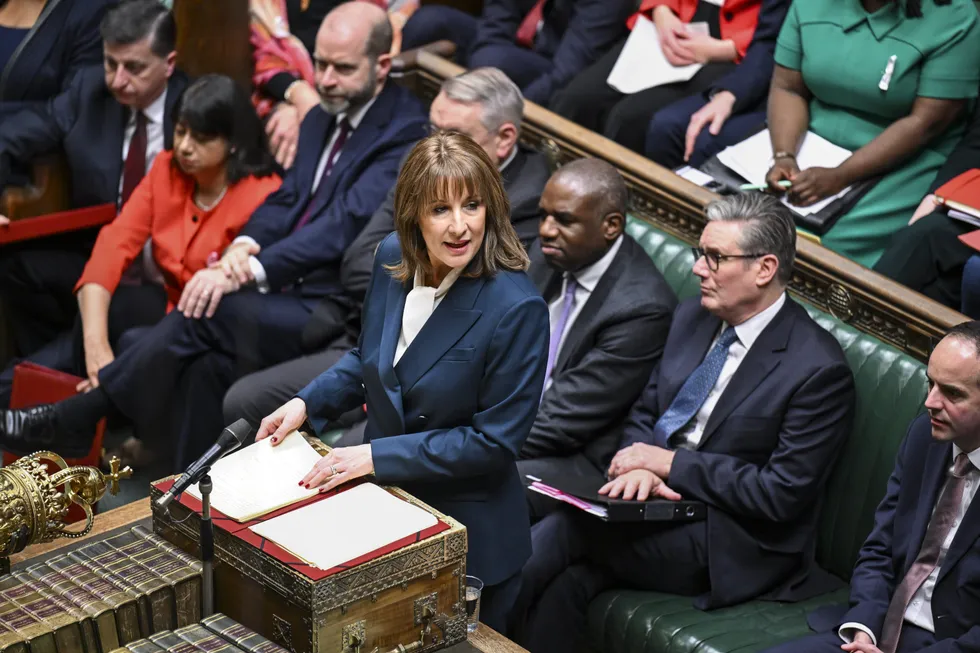 Rachel Reeves delivered the Budget in the Commons on November 26 | PA
The Government said the new policy will only apply to members whose original pension schemes included mandatory inflation protection before entering the PPF or FAS.
Under the Budget announcement, compensation payments linked to pre-1997 service will rise in line with the Consumer Prices Index.
Annual increases will be capped at 2.5 per cent.
Mr Bell said the changes will apply going forward rather than retrospectively.
He said: “Compensation payments from these schemes on pensions built up before April 6 1997 will be CPI-linked, capped at 2.5 per cent, and this will apply prospectively”.
Mr Bell confirmed the scale of those expected to benefit from the reforms.
He said: “The PPF have made an assessment that around 165,000 PPF members and 91,000 current FAS members will benefit from this change as they have some pre-97 benefits where their former schemes provided mandatory indexation”.
Pension savers whose original schemes did not include such provisions will not qualify for the higher payments.
The DWP acknowledged that a significant number of pensioners remain without inflation protection on pre-1997 benefits.
Mr Bell cited analysis from the Pensions Regulator showing that around 17 per cent of private sector defined benefit scheme members received no indexation on pre-1997 entitlements as of March 2023.
The Government said wider reforms are planned to address outcomes for defined benefit pension members.

Torsten Bell said the reforms in the Pension Schemes Bill will enable more trustees of pension schemes to share the surplus with employers
|
PAThe Pension Schemes Bill aims to allow trustees of well-funded schemes to share surplus funds with employers under specific conditions.
Mr Bell said: “Reforms in our Pension Schemes Bill will enable more trustees of well-funded defined benefit pension schemes to share surplus with employers, and deliver better outcomes for members, and benefit the wider economy, unlocking some of the estimated £160billion of scheme surplus”.
The DWP said trustees would be better placed to negotiate improved member benefits, including discretionary inflation increases.
The Pensions Regulator will issue further guidance on surplus sharing once the legislation comes into force.